Benefits of Hospital Management Software: 13 Ways It Transforms Your Hospital
· Hextgen Ai
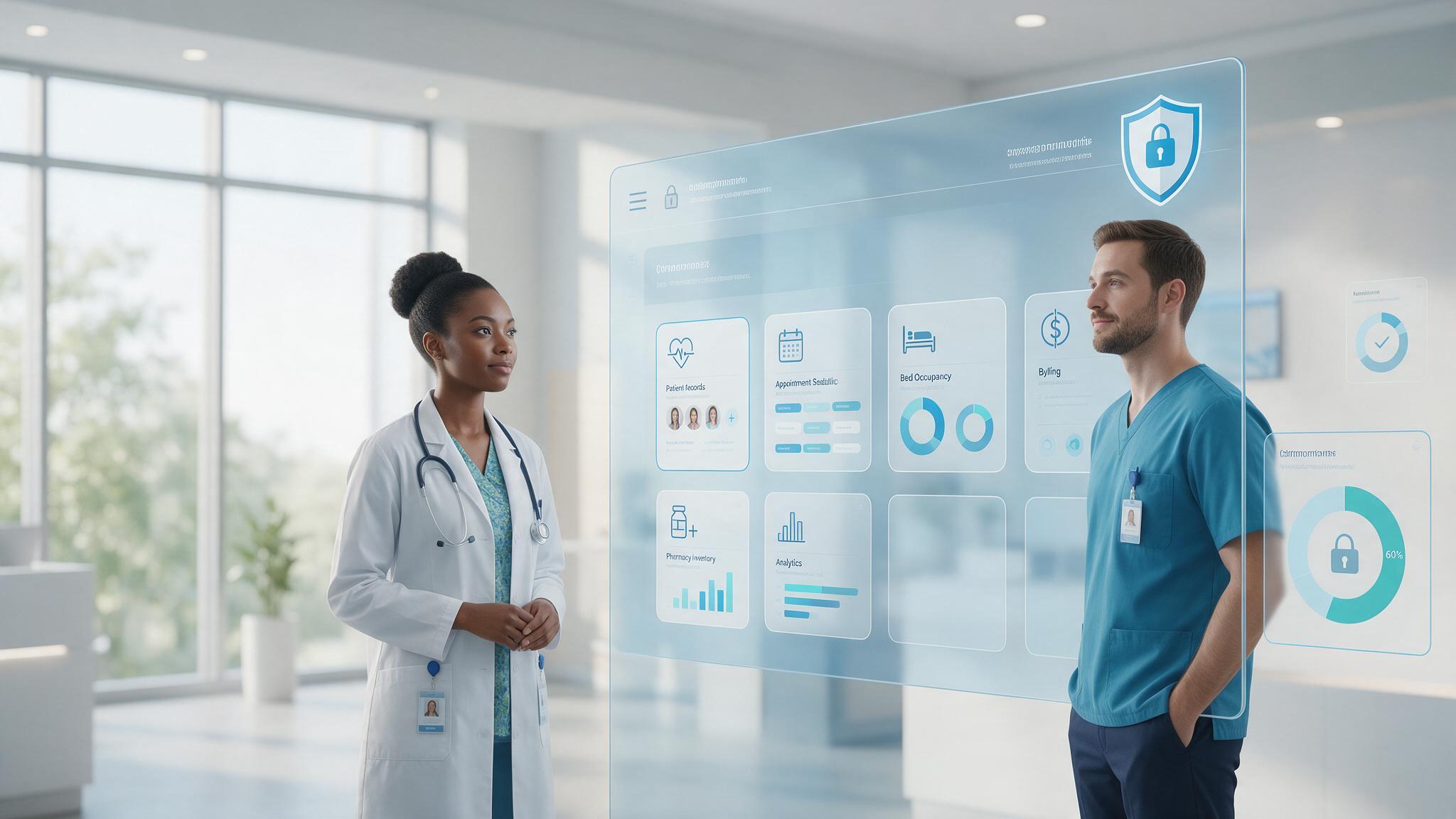
Running a hospital means managing hundreds of moving parts every day: patient registrations, doctor schedules, lab tests, pharmacy stock, billing, insurance claims and staff rosters. When all of this depends on paper files, spreadsheets and disconnected systems, mistakes and delays are unavoidable.
Hospital management software (HMS) brings all of these activities onto one connected platform. In this article, we look at the key benefits of hospital management software for patients, doctors, staff and hospital management.
What Is Hospital Management Software?
Hospital management software is an integrated digital system that manages a hospital's clinical, administrative and financial operations. It typically includes modules for:
- Patient registration and appointments (OPD and IPD)
- Electronic Medical Records (EMR/EHR)
- Billing, insurance and TPA claims
- Pharmacy and inventory
- Laboratory and radiology
- Bed, ward and OT management
- HR, payroll and staff scheduling
- Reports and analytics
Every department works from the same system and the same patient record, instead of maintaining separate registers.
1. Faster Patient Registration and Shorter Wait Times
Long queues at the front desk are one of the most common patient complaints. With HMS, returning patients can be found in seconds, new patients can be registered quickly, and appointments can be booked online in advance.
The result: less time waiting, smoother patient flow through OPD, and a better first impression of your hospital.
2. Centralized Electronic Medical Records
Paper files get lost, damaged or stuck in the wrong department. HMS stores every patient's history, diagnoses, prescriptions, lab reports, imaging and discharge summaries in one secure digital record.
- Doctors can see a patient's complete history before a consultation
- Records are available instantly across departments
- No time wasted searching for files
- Less repeated testing, because previous results are easy to find
3. Fewer Errors in Treatment and Documentation
Handwritten prescriptions and manual data entry leave room for mistakes. Hospital management software reduces errors through:
- Digital prescriptions that are clear and easy to read
- Drug interaction and allergy alerts at the time of prescribing
- Standard templates for clinical notes and discharge summaries
- Automatic transfer of lab results into the patient record, without re-typing
Fewer errors mean safer care for patients and less risk for the hospital.
4. Accurate Billing and Faster Payments
Billing is where many hospitals lose money without realizing it: missed charges, calculation errors and rejected insurance claims all add up.
With HMS:
- Every service, test, medicine and room charge is captured automatically
- Package billing and discounts are applied consistently
- Insurance and TPA claims are prepared with the right documents
- Pre-authorizations and claim status are tracked in one place
- Invoices are generated in minutes at discharge
The result: fewer revenue leaks, faster discharges and fewer billing disputes with patients.
5. Better Pharmacy and Inventory Control
Running out of an essential medicine, or throwing away expired stock, costs hospitals money and puts patients at risk. HMS helps you:
- Track stock levels in real time across the pharmacy and stores
- Get automatic reorder alerts before items run out
- Monitor batch numbers and expiry dates
- Link dispensed medicines directly to patient bills
- Reduce pilferage and wastage
6. Improved Bed and Resource Management
Knowing which beds are free, which are being cleaned and which patients are due for discharge is critical in a busy hospital. HMS gives a real-time view of:
- Bed occupancy across wards, ICU and private rooms
- Operation theatre schedules
- Equipment availability
- Expected discharges and admissions
This helps admissions teams allocate beds faster and helps management plan capacity.
7. Better Coordination Between Departments
In a hospital without integrated software, departments communicate by phone calls, paper slips and runners. HMS connects them:
- A doctor orders a lab test, and the lab sees it instantly
- Lab results reach the doctor as soon as they are ready
- The pharmacy receives prescriptions digitally
- Billing is updated automatically at every step
Better coordination means faster care and fewer things falling through the cracks.
8. Real-Time Reports for Better Decisions
Hospital owners and administrators need clear data to run the hospital well. HMS turns daily operations into useful reports and dashboards, such as:
- Daily revenue and collections
- Department-wise and doctor-wise performance
- Bed occupancy rates
- Outstanding payments and insurance claims
- Patient footfall trends
Instead of waiting for month-end reports, management can see what's happening today and act quickly.
9. Stronger Data Security and Compliance
Patient data is sensitive and protected by law. Good hospital management software protects it with:
- Role-based access, so staff only see what their job requires
- Audit trails showing who accessed or changed each record
- Encryption and secure user logins
- Regular backups so data isn't lost to hardware failure
HMS also makes it easier to meet regulatory and accreditation requirements, such as NABH standards, ABDM integration in India, or HIPAA and GDPR in other regions.
10. Lower Operating Costs
Hospital management software needs an upfront investment, but it saves money over time by:
- Reducing paper, printing and storage costs
- Cutting down on manual data entry and repeated work
- Preventing billing leaks and claim rejections
- Reducing medicine wastage and overstocking
- Letting staff spend more time on patient care and less on paperwork
11. A Better Experience for Patients
Today's patients expect the same convenience from hospitals that they get from other services. HMS makes this possible with:
- Online appointment booking
- SMS and WhatsApp reminders
- Digital lab reports and prescriptions
- Transparent, itemized bills
- Faster discharge
A smoother experience builds trust and brings patients back, and it encourages them to recommend your hospital to others.
12. Easy to Scale as Your Hospital Grows
Whether you're adding beds, starting new specialties or opening new branches, a cloud-based HMS grows with you. New users, departments and locations can be added without replacing your system, and management can view all branches from a single dashboard.
13. Ready for AI and Automation
Modern hospital management software goes beyond record-keeping. With AI and automation, hospitals can:
- Predict patient inflow and bed demand
- Flag billing errors and claim rejection risks before submission
- Automate appointment scheduling and follow-up reminders
- Speed up clinical documentation with voice-to-text
- Find patterns in hospital data that support better decisions
Choosing an AI-ready platform today prepares your hospital for the future of healthcare.
Benefits at a Glance
| Who Benefits | Key Benefits |
|---|---|
| Patients | Shorter waits, online booking, digital reports, faster discharge |
| Doctors | Complete patient history, digital prescriptions, instant lab results |
| Nurses and staff | Less paperwork, clear task lists, better coordination |
| Billing and accounts | Automatic charge capture, faster claims, fewer disputes |
| Management | Real-time dashboards, lower costs, better planning |
Conclusion
Hospital management software is no longer a luxury reserved for large hospitals. Hospitals of every size can use it to deliver safer care, reduce costs and stay competitive. It reduces errors, speeds up billing, improves coordination between departments and gives management the data it needs to make better decisions.
Most importantly, it frees doctors, nurses and staff from paperwork so they can focus on what matters most: caring for patients.
Ready to see these benefits in your hospital?
Discover how Hextgen AI's hospital management software can simplify your operations. Book a Free Demo