The Real Problems Digital Prescriptions Solved for Our Clients
· HextGen Team
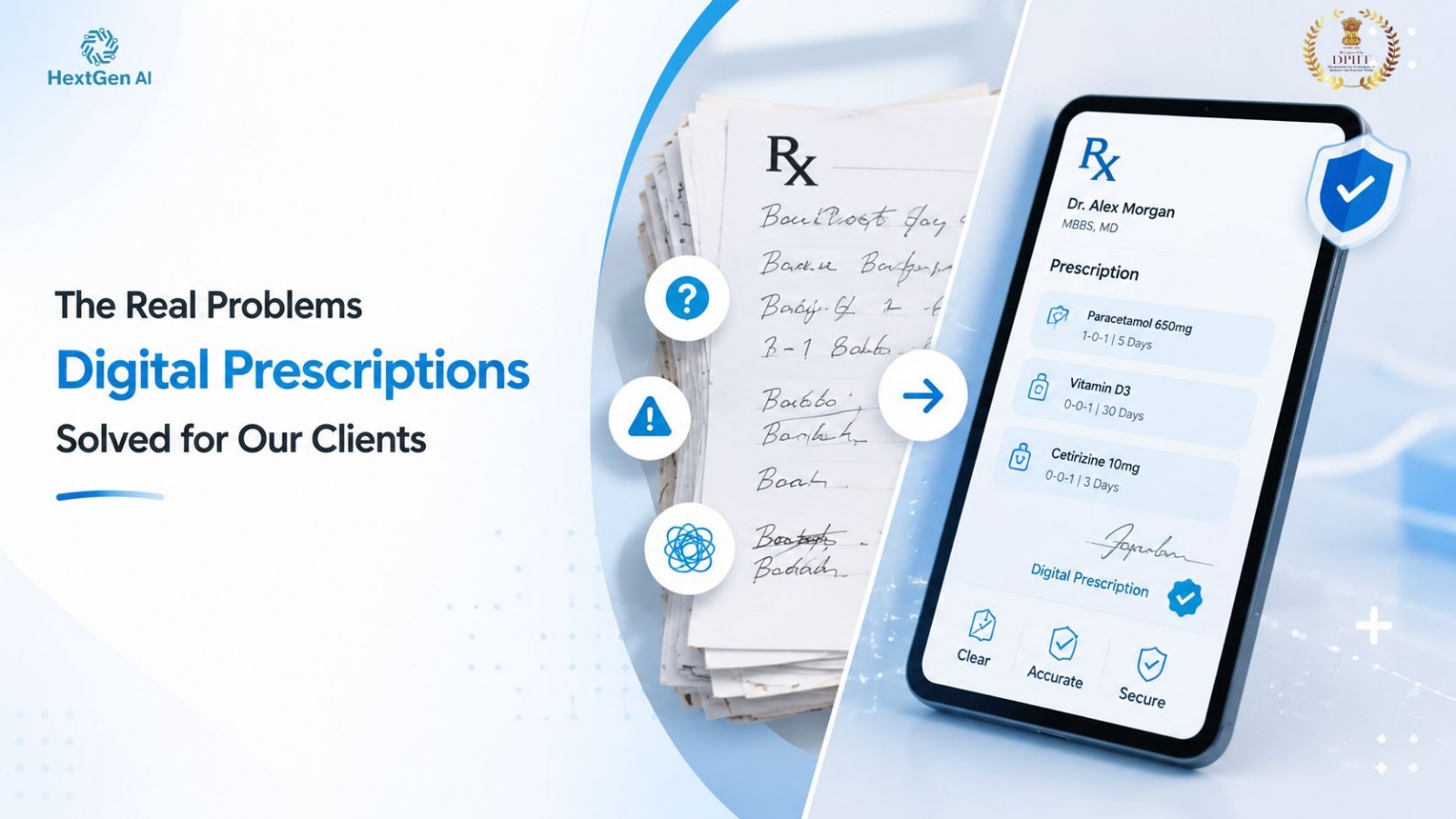
Someone asked on Quora: "How do digital prescriptions improve patient care?"
Instead of answering that in theory, we want to share it the way we actually hear it, through the problems our clients used to deal with, and what changed once they switched to digital prescriptions.
These aren't abstract product benefits pulled from a features page. They're the exact words used by clinic owners, doctors, and front desk staff describing their day to day before and after making the switch.
"Our pharmacist kept calling us back to confirm what the doctor wrote."
Before switching, a clinic owner told us their pharmacist would call the OPD almost daily just to double check a dosage or drug name, because the handwriting wasn't clear enough to be sure.
That back and forth wasn't just annoying. It slowed down dispensing, pulled the doctor out of a consultation to answer a phone call, and left room for the wrong assumption to be made if the pharmacist couldn't get through in time.
After moving to digital prescriptions, that stopped completely. What the doctor types is exactly what the pharmacist sees, same drug name, same dosage, same instructions, every time. No calls, no confused dispensing, no re checking.
"Our doctors were exhausted from writing all day."
One doctor running a busy OPD said he was seeing 40 to 50 patients a day and spending more time writing prescriptions than actually talking to patients. By the end of the day, his hand was tired and his notes were rushed, which is exactly the kind of pressure that leads to the illegible handwriting problem in the first place.
With templates and voice to text, he said prescriptions now take seconds. Common drug combinations and dosages are saved as reusable templates, and for anything custom, he can just speak it instead of writing it out. That time saved goes straight back into the consultation, he can look at the patient instead of the pad.
"Patients kept saying they forgot their old prescription."
Front desk staff at more than one clinic mentioned this as a daily headache. Patients would show up without their previous prescription, causing delays while doctors tried to reconstruct history from memory or from whatever the patient could vaguely recall.
This wasn't just an inconvenience, it meant doctors were sometimes making decisions with incomplete information, which is a real risk when it comes to drug interactions or dosage changes over time.
Now, every past prescription is saved against the patient's record permanently, visible instantly at the next visit, regardless of whether the patient remembered to bring anything with them.
The Real Promise of Digital Prescriptions
These aren't hypothetical benefits. They're the exact problems our clients described before switching, and what actually changed for them after.
That's the real promise of digital prescriptions, not "going paperless," but removing the small everyday failure points that quietly cost clinics time and put patients at risk. A pharmacist who doesn't have to call back. A doctor who gets minutes of his day back per patient. A front desk that doesn't have to manage frustrated, forgetful patients.
Individually, each of these is a small fix. Together, they add up to a clinic that runs smoother for everyone in it, staff and patients alike.
Book a free demo to see how digital prescriptions can work for your hospital or clinic.